Blindfolds in Escape Rooms: What to Expect and How to Prepare

Some escape rooms start with a blindfold. It is a storytelling device, not a test of nerve. Your team hears the setup in the dark, takes the blindfolds off when the clock starts, and finds itself already inside the story. If you are booking a room that opens this way, you can ask for details first, you can say no to anything you are not comfortable with, and a little preparation makes the first minute much easier.
This guide covers why operators use blindfolds, what the opening minutes usually look like, how to prepare, what to do if you feel uneasy, and which questions to ask before you pay for a booking.
TL;DR
- A blindfold is an opening effect. In the usual version, players hear the story first and remove the blindfolds when the game begins.
- Rooms that go further, with restraints, scares or physical contact, are a different category. Ask about them before you book, and agree as a group.
- You can ask to skip a blindfold. Tell the venue when you book, not at the door, so the game master can plan around it.
- If you feel anxious or disoriented, stop, take the blindfold off, breathe, and tell the game master. A good venue will adjust.
- Read the room description and the venue’s own guidance on fear, anxiety and physical requirements before choosing a room for a mixed group.
Table of Contents
- Why some escape rooms start blindfolded
- What actually happens once the blindfolds go on
- How to prepare for a blindfolded start
- If you feel anxious, uncomfortable or disoriented
- Can you skip the blindfold or ask for an accommodation?
- Questions to ask before you book a blindfolded room
- Our perspective: immersion without pressure
- Choosing a room that fits your group
- Book a private room in Colorado Springs
- Tips for the game master briefing
- FAQ
- Sources
Why some escape rooms start blindfolded
The short answer is immersion. An escape room works best when players stop feeling like customers in a building and start feeling like characters. A blindfold helps in three ways.
It controls the reveal. If you walk through a door and see the whole set at once, the first impression is a room full of props. If you are led in blind, listen to a narrator, and then take the blindfold off, the set arrives all at once, as part of the story. Escape room design writers describe this pattern directly: players hear the story and meet the characters blindfolded in their starting positions, then remove the blindfolds when the game starts.
It sets the stakes. Plots about kidnappings, heists gone wrong, prisons or ancient curses often begin with the characters being captured, drugged or lost. A blindfold turns that line of backstory into something you feel for thirty seconds.
It makes the first puzzle fair. Everyone starts from the same position, with the same information, and nobody has had a chance to scan the shelves for clues. The clock and the story begin together.
Blindfolds are not standard. Most escape rooms never use them. They show up mainly in captivity, mystery and horror themes, which is why a search for them tends to bring up threads from nervous first-timers as much as lists of rooms.

What actually happens once the blindfolds go on
There are two quite different versions, and it matters which one you are booking.
The intro-only blindfold
This is the gentle version. A game master or a recorded voice walks you into the room, positions you, and delivers the briefing. Then you are told to remove the blindfolds, and the timer starts. You do not have to solve anything while you cannot see. The whole thing usually lasts a minute or two.
The blindfold as part of the game
Some rooms keep the restriction going. Design analysis of dark and low-sight rooms points out that taking away sight limits puzzles mostly to hearing and touch, calls for safer layouts and props, tends to favor simpler or more linear routes, and can need verbal help from the game master. That is a useful way to think about what you are signing up for. A room built this way is a communication exercise. Someone describes, someone touches, someone listens.
If you want to see how that kind of sensory limit works in fiction, this piece on locked room mysteries and the clues to watch for shows how stories use confinement and restricted senses to build tension.
The extreme version
A third category exists, mostly in horror and “extreme” rooms. A 2024 Los Angeles Times report on one Southern California horror room described a game in which players are blindfolded, chased, possibly shocked and carried off in a body bag while solving puzzles. The same report notes that elements like full contact or shock pens need the group’s explicit agreement before anyone takes part. That is the right standard. A blindfold in a family-friendly room and a blindfold in a full-contact horror room are not the same product, and the booking page should make clear which one you are buying.
How to prepare for a blindfolded start
Preparation is mostly about removing surprises, which is the opposite of what the blindfold does inside the game. Do the following before you arrive.
- Read the room description twice. Look for words like captured, kidnapped, restrained, dark, scary or intense. If the description does not mention a blindfold, ask. Do not assume either way.
- Talk it through as a group. One person who dreads the opening can quietly spoil the experience for six others. Agree before the day who is fine with it and who is not.
- Tell the venue about your group. Mention children, anyone with a vision or balance condition, anyone who is pregnant, anyone who has had a panic attack in dark or tight spaces. Staff can only adapt if they know.
- Dress for movement. Flat, closed shoes and clothes you can move in. If you will be led while unable to see, you want stable footing.
- Remove loose items. Lanyards, long necklaces and bulky bags are easy to snag when you cannot see. Leave them in the lobby.
- Eat and drink beforehand. Low blood sugar and a dark start feed each other. A normal meal an hour or two before helps.
- Use the restroom first. Our guide on what happens if you need the bathroom during an escape room covers the practical side.
If this is your first game altogether, our first-game checklist for beginners walks through the rest of what to bring, wear and expect.
If you feel anxious, uncomfortable or disoriented
Losing sight changes how your body reads a room. Balance feels different, sounds seem closer, and people who are fine in the dark with their eyes open can feel a jolt of panic when the choice to look is taken away. That is a normal reaction and not a sign you cannot play.
If it happens:
- Take the blindfold off. In a normal room this is always allowed. You do not need permission, and you do not need to wait for the signal. If you are unsure whether it is allowed in a specific room, ask at the briefing before you go in.
- Say so out loud. Tell the person next to you or the game master. Game masters watch and listen throughout the game, and they would much rather help early than late.
- Slow your breathing. A longer breath out than in, repeated a few times, settles most people within a minute.
- Anchor yourself. Hold a teammate’s arm, touch a wall or table, and name three things you can hear. It gives your brain something to hold.
- Step out if you need to. Leaving is always an option in a reputable venue. Stepping out for five minutes and returning is fine, and so is sitting the rest out.
For longer reading on this, we have written separately about escape room anxiety, claustrophobia in escape rooms and how scary escape rooms really are. If you have an anxiety or panic disorder, or a medical condition that affects balance or vision, talk to your own doctor or therapist about whether a blindfolded opening is right for you. That is a conversation about your health that a booking page cannot have for you.
Can you skip the blindfold or ask for an accommodation?
Yes, ask. Most operators will make a simple change, such as letting you keep your eyes open, wear the blindfold loosely, or be seated and guided in rather than walked in. Two things make the request easy to grant.
Ask early. Put it in the booking notes or message the venue a few days ahead. A game master who knows beforehand can change the briefing so you are not singled out in front of your group.
Be specific. “I would prefer not to be blindfolded” is enough. “I have low vision and a blindfold would disorient me” is also enough. You do not owe anyone a medical history.
There is a legal side too. Escape rooms are businesses open to the public, and the federal Americans with Disabilities Act, Title III, covers public accommodations. The Department of Justice publishes a Title III technical assistance manual that explains what that covers. Physical access, such as routes and door widths, is mostly set when a building is designed. Day-to-day adjustments to how a game starts are usually a conversation with the venue. If you believe you were treated unfairly, the ADA site explains how to file a complaint.
Accessibility is also more than wheelchairs. Our guide to escape room physical requirements covers mobility, stairs, crawling and standing, and our piece on lighting in escape rooms explains how darkness and brightness shape a game.
Questions to ask before you book a blindfolded room
A reputable venue is happy to answer all of these, and the answers tell you a lot about how the room is run.
| Question | Why it matters |
|---|---|
| How long does the blindfold stay on? | Intro-only is a minute or two. Gameplay in the dark is a different challenge. |
| Will anyone touch or move me? | Guided by a hand on the shoulder is not the same as physical contact in a scare room. |
| Are there restraints, such as handcuffs? | Some themes add them. You should know in advance. |
| Are there jump scares, actors or shock effects? | Extreme rooms need your group’s explicit agreement. |
| Can I remove the blindfold at any time? | The answer should be yes. |
| Is there a way to stop the game? | Every room should have a way to call the game master and a safe exit. |
| Is the room suitable for children, and from what age? | Age guidance varies from room to room. |
| Is the room private to my group? | You do not want strangers leading you around blind. |
That last one deserves emphasis. If you are going to be blindfolded, you want to be with people you trust. Playing with a random group you have never met adds an extra layer to an already unsettling start.
Our perspective: immersion without pressure
We are a family and veteran owned escape room in Colorado Springs, and we think the best opening to a game is one every player chooses to enjoy. Immersion is the goal. Fear is optional.
Our rooms are always private, which means the only people in the room with you are the people you came with. That changes how any dramatic opening feels. Nobody is watching a stranger fumble in the dark, and nobody is pressured to go along with a bit they dislike. It also means the group can decide as a group how intense it wants the experience to be.
We have built a lot of variety into what we offer: a real airplane in one room, a pirate ship in another, a speakeasy, a museum, a wizard’s school, a prison and more. Intensity varies from room to room, and a story-first room is not automatically a scary one. For any question about how a specific room begins, what it asks of players, or whether it suits a nervous teenager or a grandparent, ask us before you book. We would rather change your plans than have anyone spend an hour wishing they were somewhere else.
Our advice to any group is simple. Pick the room for the group’s least comfortable member, not the boldest. Tell the game master what you need. And remember that stopping, sitting out or taking something off is part of playing, not a failure at it.
— CodeBusters
Choosing a room that fits your group
If the blindfold question is really a question about intensity, use the theme as your guide.
- Story-led adventure. Rooms built around exploration, treasure hunting or a museum after hours tend to feel energetic and playful rather than frightening. Colorado Jones is a good example of this style.
- Period and character themes. A 1920s dinner with a mob boss, for instance, leans on atmosphere, costume and tension rather than dread. See Dinner at Capone’s.
- Fantasy. A wizard’s academy gives you magic and mystery with a lighter emotional tone.
- Darker themes. Prison breaks, haunted places and villains’ lairs lean more intense. Read those descriptions closely and talk to your group first.
For mixed-age groups, corporate outings and birthday parties, a lighter room is nearly always the better first choice. You can always graduate to a darker one next time. Our guide to how puzzles shape your escape room experience and the one on how clues shape the game will help you pick a style of play that suits you.
Book a private room in Colorado Springs
We run thirteen themed rooms across two Colorado Springs locations, and every booking is a private room for your group. Whether you are planning a family afternoon, a team-building outing, a birthday or a night out with friends, we can help you match a room to your group’s comfort level. We offer discounts for military and veterans, and gift vouchers if you are buying for someone else.
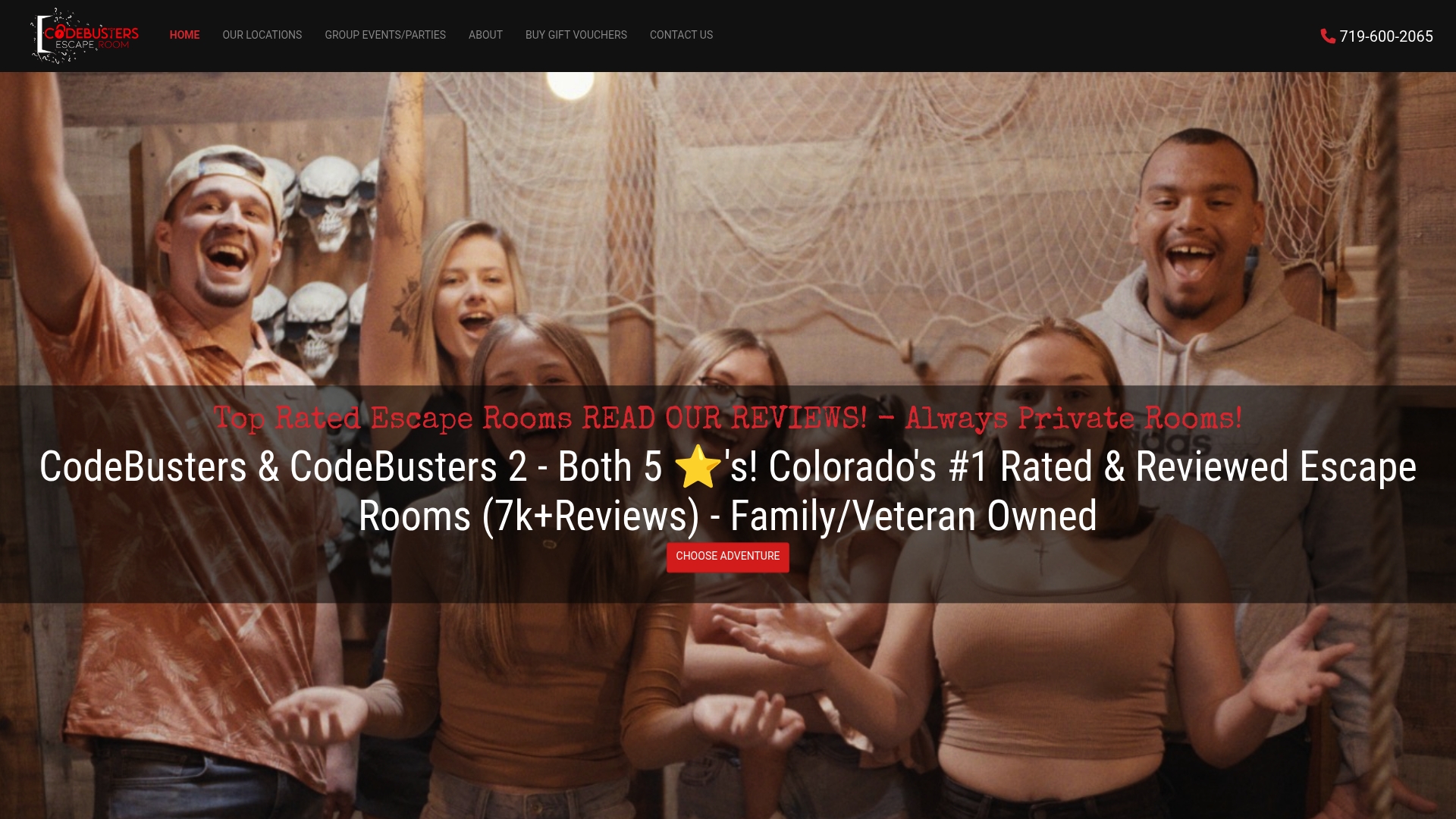
Browse every room, themes and group sizes on our rooms page. If you already have a theme in mind, you can book Colorado Jones, Dinner at Capone’s or Wizard’s Academy: The Forbidden Chamber directly. Not sure which one suits your group? Message us through our website and tell us who is coming.
Tips for the game master briefing
The briefing before you go in is your best chance to set the terms of your game. Use it.
- Ask how to call for help. Most rooms have a walkie-talkie, a phone or a button. Know where it is before the door closes.
- Confirm the stop signal. Agree on a word or gesture that means “I need out” and make sure everybody in your group knows it.
- Ask about hints. Hints are usually unlimited or capped. Knowing which tells you how hard to push on a tough puzzle.
- Say what you do not want. If anyone dislikes being touched, or does not want to be led, say so now.
- Check the exit. Ask where the door is and whether it is locked. In a properly run room it is never locked in a way that stops you from leaving.
When a room leans into horror, the practices behind it matter. The owners of the Southern California room in the Los Angeles Times report said they train staff extensively, including experiencing the scare mechanics themselves, so the high-intensity moments are delivered in a controlled way. Look for that kind of care in any venue that offers rough or frightening experiences.
FAQ
Are all escape rooms blindfolded at the start?
No. Most escape rooms never use a blindfold. It is a theme-specific effect, found mostly in rooms about kidnapping, captivity, mysteries and horror. If a room description does not mention it, ask the venue before you book.
Can I take the blindfold off if I feel uncomfortable?
In a normal escape room, yes, and you should. Take it off, tell your game master or a teammate, and breathe for a minute. If a venue tells you that you cannot remove a blindfold at any time, ask why before you agree to play.
Can I ask to skip the blindfold?
Yes. Ask when you book or message the venue a few days before, so the game master can adjust the opening. You do not need to explain more than you want to. Most operators can start you with your eyes open or change the briefing.
Is a blindfolded escape room safe for kids?
It depends on the room, the child and how the blindfold is used. An intro-only blindfold in a story-led room can be fine for many children, while a horror room with restraints or contact is not. Check the age guidance, talk to the venue and let the child decide.
What if someone in my group has anxiety or a vision condition?
Tell the venue when you book, and pick a room that suits the most sensitive person in the group. For health questions about anxiety, panic or vision, speak with your own doctor or therapist before you go. The game master can then adjust the opening and watch for signs of distress.