Book Smart at Codebusters: Why 4–6 Players Beat Escape Room Minimums
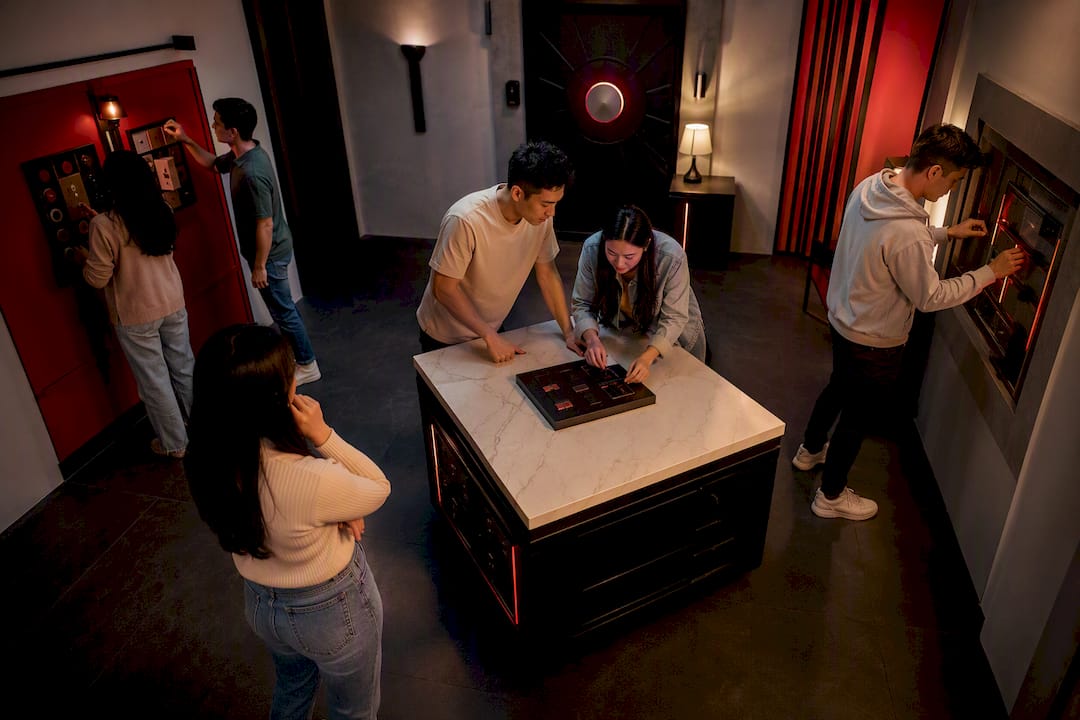
Most escape rooms require at least two players, and some cap the low end at three, but the group size that actually delivers the best experience is generally recommended around four to six players. Maximum group sizes vary depending on the room’s design, puzzle layout, and how the operator staffs the session.
Table of Contents
- How Many Players Does an Escape Room Require?
- What’s the Difference Between Minimum and Maximum Capacity?
- Why Do Some Rooms Require More Players Than Others?
- What If Your Group Is Smaller Than the Minimum?
- Tips by Group Size: 2, 3, 4-6, and 7+ Players
- What Operators Actually Do When You Call to Book
- Escape Room Minimum Players: How Many You Need to Win
- Ready to Book Your Group at Codebusters Escape Room
- Sources
How Many Players Does an Escape Room Require?
Two people can legally book almost any public escape room. Three is the more common floor for private rooms built around simultaneous puzzles. But the number that actually wins games and makes people want to book again is 4 to 6 players, and there’s a reason that range shows up across the industry rather than 5 or 7.
Escape rooms are built assuming multiple brains work different puzzle threads at once. A group of four to six gives you enough hands to split into two or three working pairs without anyone standing around waiting for a clue. Breakout Games notes that this range is the industry’s standard recommendation for a reason: it balances role coverage against room space, since most rooms are built for a party, not a crowd.
That doesn’t mean smaller is worse. Two experienced puzzlers who communicate well can out-solve a disorganized group of six.
Two or three players work fine when:
- It’s a date night and the point is the shared experience, not the fastest clock time
- Both players have done several rooms before and know how to divide labor fast
- The room is specifically rated for a smaller group (check the listing before assuming)
Pro Tip: Call ahead and ask the staff which of their rooms plays best for your exact group size. Operators know which rooms reward a tight duo and which ones bog down without at least four people working stations.
What’s the Difference Between Minimum and Maximum Capacity?
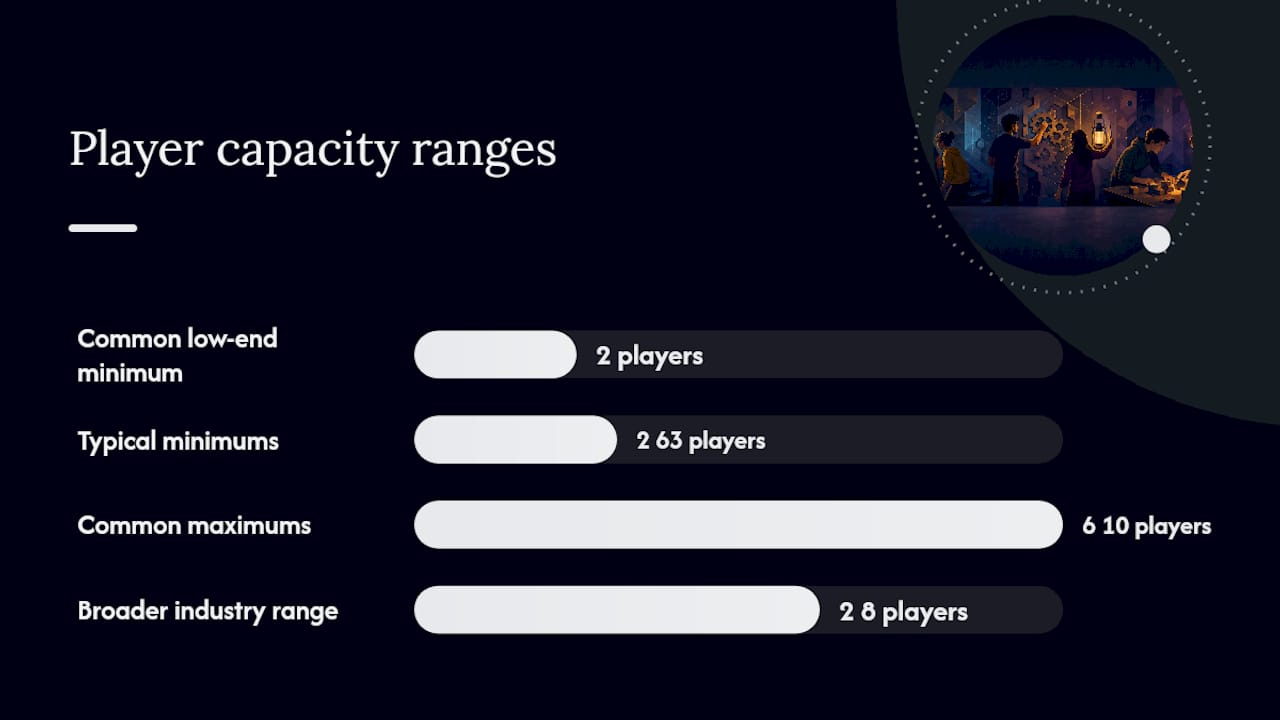
Every room has two numbers that matter: the floor and the ceiling. Will To Escape reports that the common industry range runs from 2 players at the low end up to 8 at the high end, though some large-format rooms push past that. Minimums usually sit at 2 or 3. Maximums typically land between 6 and 10, depending entirely on how the room was designed and how many puzzle stations it holds.
You’ll find these numbers on the booking page itself, usually right next to the room description or embedded in the reservation widget. Platforms like FareHarbor’s booking system display per-room capacity directly and will block you from booking outside those limits online.
A few things to check before you assume a room fits your group:
- Whether the listed minimum applies to private bookings or only public sessions
- Whether the venue lets you pay a flat private-room rate to unlock a room below its stated minimum
- Whether the maximum is a hard cap or a “recommended” number staff can flex on request
Private bookings often waive the strict minimum if you’re willing to pay for the empty spots, since the operator is selling the whole room rather than per-seat tickets.
Why Do Some Rooms Require More Players Than Others?
Minimums aren’t arbitrary. They come from three practical constraints: physical space, puzzle mechanics, and safety.
A room built with multiple locked stations that all need solving at once genuinely doesn’t work with two people running back and forth. West Palm Beach Escape Rooms explains that puzzle architecture, meaning whether tasks run in parallel or in a single sequence, often decides whether a room needs a bigger team rather than simply allowing one.
Common reasons a venue sets a higher minimum:
- The physical footprint requires bodies in separate areas simultaneously
- Puzzles are designed to be split across stations that unlock in parallel
- Kids’ rooms often require an accompanying adult, which raises the effective headcount
- Staff need enough visual coverage to monitor safety without a game master overwhelmed by one player wandering unsupervised
If you’re planning around a mixed-age group, these supervision rules matter more than the raw player count.
Pro Tip: Ask specifically whether the minimum is a “puzzle design” minimum or a “revenue” minimum. The first means the room genuinely won’t work with fewer people. The second means the venue is protecting per-session revenue and might flex it for the right price.
What If Your Group Is Smaller Than the Minimum?
Showing up short of the listed minimum doesn’t have to mean canceling. Try these in order:
- Call the venue directly rather than booking online. Staff can often quote a private-room flat rate that ignores the per-person minimum entirely.
- Ask about paying for the empty spots. Many operators will let you book a 4-person minimum room with 2 players if you cover the difference. As noted in Breakout Games’ booking guidance, this is one of the most common workarounds smaller groups use.
- Check for a public or “open” session. These mix your small group with strangers to hit the minimum, and they’re often cheaper per person than a private buyout.
- Reschedule for a night with better availability. Some venues run open sessions only on certain days, so a Tuesday might work when a Saturday won’t.
- Combine bookings with another small group. If a friend’s group is also short, ask the venue about merging you into one session.
Tips by Group Size: 2, 3, 4-6, and 7+ Players
The right strategy shifts depending on your headcount, and knowing your group’s shape before you book saves you a frustrating hour.
Two players should pick a simpler room or expect to run longer than the posted average time. Split roles hard: one person reads and tracks clues, the other physically searches. Don’t both chase the same lock.
Three players work well in compact rooms. Rotate who calls out findings so one person doesn’t dominate the conversation, and appoint a single communicator to avoid three people shouting solutions at once.
Four to six players hit the sweet spot most rooms are built for. Assign clear roles: a searcher, a puzzle solver, a communicator who tracks the overall picture, and a materials manager who holds found items so nothing gets lost in the shuffle.
Seven or more players usually overload a standard room. Will To Escape’s research points out that most public rooms cap out near 6 to 8, which means larger groups typically need to split across two rooms or confirm the venue has a large-format room built for it.
| Group size | Best strategy | Common pitfall |
|---|---|---|
| 2 players | Choose a simpler room; split search vs. read roles | Running out the clock on complex parallel puzzles |
| 3 players | Rotate roles; appoint one communicator | Three people talking over each other |
| 4-6 players | Assign searcher, solver, communicator, materials manager | Nobody assigns roles and half the group stands idle |
| 7+ players | Split into two rooms or book a large-format room | Booking a standard room that physically can’t fit the team |
For more on matching group dynamics to a theme, see how group size impacts overall fun and success rate.
What Operators Actually Do When You Call to Book
Booking guidance sounds better coming from someone who runs the rooms every day rather than a generic rule of thumb. Codebusters Escape Room operates two Colorado Springs locations with themed rooms like Past to the Future, Stranger 80’s, and Flight of Deception, each built with a different player range and puzzle density in mind.
A few things that speed up the call when you’re booking a smaller-than-listed group:
- Mention your exact headcount up front so staff can quote the right pricing structure immediately
- Ask which specific room in their lineup plays best for your group size, not just which one is available
- Ask about private-room flat pricing versus per-person public session pricing before you commit
Codebusters is veteran and family owned, and its award-winning rooms are built around private bookings and event packages, so staff are used to working around groups that don’t hit a room’s default minimum.
Escape Room Minimum Players: How Many You Need to Win
The advice most articles give on this topic treats “minimum” and “ideal” as the same number, and that’s where readers get misled. A room’s minimum tells you what the venue will let you book. It says nothing about whether that group size will actually have fun or solve the room.
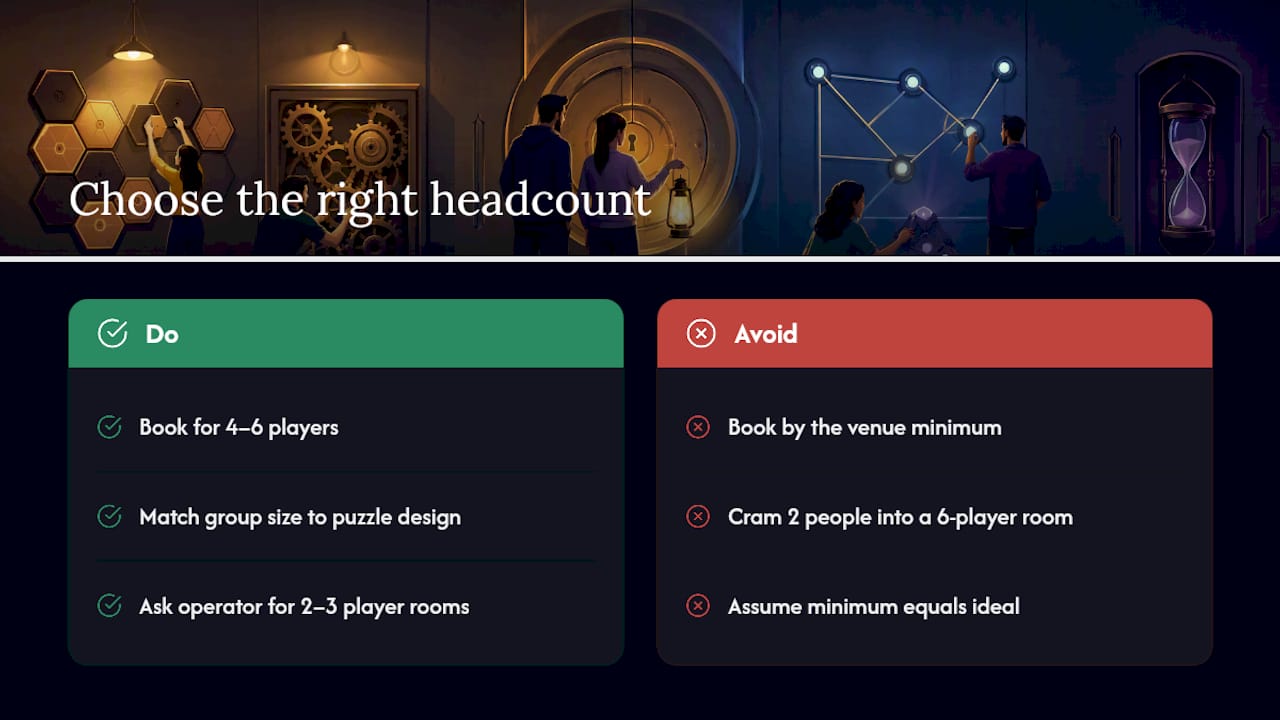
Here’s the judgment worth acting on: don’t book based on the smallest number that qualifies you for a private session. Book based on the number that matches the room’s puzzle design, which for most standard rooms is 4 to 6 players. If your real group is smaller than that, don’t force it into a room built for six, ask the operator which of their rooms is actually rated well for two or three people.
The conventional advice (“just meet the minimum”) ignores that a two-person group crammed into a six-person parallel-puzzle room will likely run out the clock and leave frustrated. Prioritize matching group size to room design first. The minimum is a booking rule. The right headcount is a strategy.
— CodeBusters
Ready to Book Your Group at Codebusters Escape Room
Codebusters Escape Room runs private-room bookings and event packages at two Colorado Springs locations, so your group gets the whole room whether you show up with two people or twelve.
If your group falls under a room’s listed minimum, don’t assume you’re out of luck. Call the location directly and staff will walk you through private-room flat pricing or point you toward a room built for a smaller team. Corporate groups and parties planning a surprise event can also ask about event packages that bundle multiple rooms or add-ons for the full group. For general engagement ideas around larger corporate bookings, see this guide to corporate event engagement.
Check room availability and current player ranges at Codebustersescaperoom, or call ahead to ask specifically about booking below the posted minimum. Staff can confirm which themed room fits your exact group size before you commit.