Planning Team Building for Remote Employees: 2026 Guide

Planning team building for remote employees is the structured practice of designing purposeful activities that build connection, trust, and collaboration among distributed workers. Remote worker loneliness runs at 25% daily, compared to 16% among on-site peers. That gap does not close on its own. HR managers and team leaders who treat remote team building as a consistent, year-round discipline, not a quarterly checkbox, see measurable gains in morale, retention, and communication. The difference between a disengaged distributed team and a high-performing one often comes down to how deliberately you plan the social fabric of their work.
How to plan team building for remote employees with a structured cadence
The single most effective framework for remote team bonding activities is a tiered cadence that blends short, frequent touchpoints with longer, high-impact events. Blending low-effort and high-impact sessions reduces anxiety and sustains engagement over time. A sporadic all-hands event every six months does not build trust. Consistent, predictable connection does.
The 2026 industry standard cadence breaks down into three tiers:
| Frequency | Duration | Format | Primary Goal |
|---|---|---|---|
| Weekly | 10–15 minutes | Icebreakers, check-ins | Reduce daily isolation |
| Monthly | 30–45 minutes | Skill games, virtual socials | Build familiarity and trust |
| Quarterly | 90–120 minutes | Immersive events, workshops | Deepen collaboration |
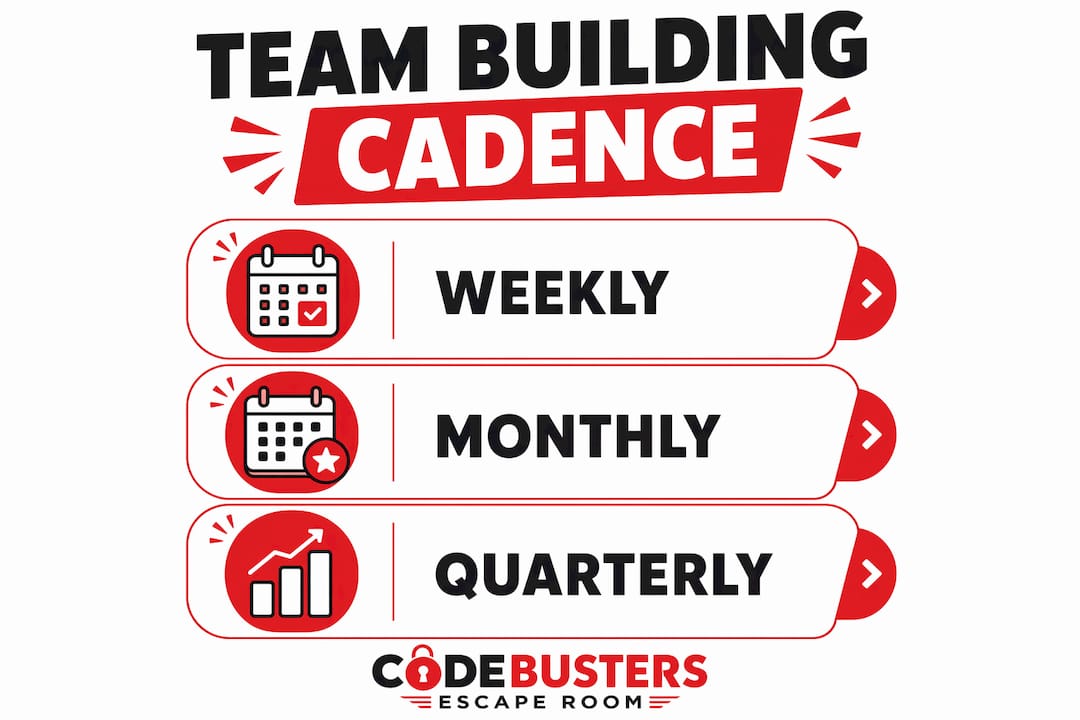
Weekly icebreakers are low-stakes and easy to run. A two-question prompt at the start of a Monday standup, a shared photo thread, or a quick trivia round takes almost no preparation and delivers a consistent social signal: your team exists beyond the work ticket. Monthly sessions give teams space to interact without the pressure of a big event. Quarterly events are where you invest real budget and planning time.
Pro Tip: Rotate facilitation across team members each month. This distributes the planning load, surfaces different communication styles, and prevents any single person from becoming the “fun coordinator.”
What does an 8-week planning timeline look like for remote team events?
Successful planning remote team events requires a lead time of at least eight weeks for any session longer than 30 minutes. An 8-week planning timeline with clear milestones is the most reliable way to avoid last-minute chaos and low turnout.
Here is how to structure those eight weeks:
- Week 8: Set objectives. Define what success looks like. Are you targeting communication skills, cross-functional relationships, or morale after a difficult quarter? Every activity decision flows from this.
- Week 6: Select the activity and vendor. Match the format to your objective. Evaluate entertainment vendors carefully before committing. A guide to evaluating corporate entertainment vendors can help you ask the right questions about platform compatibility, group size limits, and facilitation quality.
- Week 5: Gather participant preferences. Send a short survey. Ask about time zone constraints, accessibility needs, and activity preferences. This step alone dramatically increases buy-in.
- Week 3: Lock logistics. Confirm the vendor, send calendar invites with video links, and communicate the agenda. Do not leave this to the week before.
- Week 1: Test everything. Run a full technical rehearsal. Confirm the video conferencing platform, breakout room settings, and any third-party tools.
Budgeting deserves its own attention. Per-person costs for virtual team building events vary widely depending on format. A self-facilitated trivia session costs almost nothing. A professionally hosted virtual experience can run from a few dollars to well over $50 per person. Build your budget around your quarterly event, then allocate smaller amounts for monthly and weekly touchpoints.
Pro Tip: Schedule all team building activities during paid work hours. Scheduling within work hours respects work-life balance and consistently produces higher participation rates than after-hours events.
How do you choose the right activities for different team sizes and goals?
Activity selection is where most team leaders make their biggest mistake. 70% of employees feel disengaged at work, and poorly matched activities accelerate that disengagement. The antidote is matching the format to both the team size and a specific, stated objective.
Small teams (fewer than 10 people)
Small teams thrive with intimate formats. Intimate sharing sessions like virtual coffee chats, Show and Tell, or “two truths and a lie” work well because everyone gets airtime. The goal is psychological safety, not spectacle.
- Virtual coffee roulette: Randomly pair team members for 15-minute one-on-one chats each week. Tools like Slack’s Donut app automate the pairing.
- Show and Tell: Each person shares one object from their home that means something to them. This format builds personal connection faster than most structured activities.
- Collaborative playlists: Teams build a shared music playlist on Spotify. Low effort, surprisingly revealing, and it lives beyond the session.
Medium and large teams (10 or more people)
Larger teams need structure to prevent chaos. Large remote teams require breakout capabilities and activities that scale without losing personal engagement. Virtual escape rooms, trivia competitions with team brackets, and online cooking or craft classes all work well at scale.
- Virtual escape rooms: These build problem-solving and communication skills under time pressure. They work for groups of 4 to 50+ when properly structured with breakout rooms.
- Team trivia with brackets: Divide into groups of 4–6, run rounds, and crown a winner. The competition element drives energy without requiring physical presence.
- Online workshops: A 45-minute session on a shared skill, such as negotiation, storytelling, or data visualization, combines learning with team interaction.
Hybrid teams need separate, tailored events rather than a single combined session. Putting remote employees in a video window while on-site colleagues interact in a room is not inclusion. It is a front-row seat to exclusion.
Pro Tip: Test platforms and tools 24 hours in advance. A broken video link or a platform login issue at the start of a session kills momentum and signals to your team that the event was not worth proper preparation.
What are the best practices for engaging remote employees long-term?
Sustained remote work team engagement requires feedback loops, clear metrics, and a willingness to change what is not working. A single successful event does not build culture. Repeated, intentional connection does.
Forced social activities reduce engagement. The most effective remote team building programs are built on voluntary participation, clear objectives, and a genuine respect for employees’ time. When people feel the activity serves them, not just the company’s culture checklist, they show up.
Start measuring two things: participation rates and qualitative feedback. Participation rate is simple. Track who attends each session over time. A declining trend is a signal, not a coincidence. Qualitative feedback requires a two-question pulse survey after each event: “What worked?” and “What would you change?” These answers tell you more than any engagement score.
Teams that iterate their calendar based on feedback see better long-term results than those who repeat the same format indefinitely. Keep your team building calendar as a living document. Review it quarterly. Retire what is not landing. Double down on what generates energy.
Watch for these red flags:
- Attendance dropping below 60% for two consecutive sessions
- The same three people always facilitating
- Feedback that activities feel “mandatory” or “performative”
- No new formats introduced in the past two quarters
When you spot these signs, do not add more events. Change the format, the facilitator, or the objective. More of the same rarely fixes disengagement.
The downstream benefits of getting this right are concrete. Teams with consistent bonding practices report stronger cross-functional communication, faster onboarding for new hires, and lower voluntary turnover. Escape rooms build stronger teams by putting people in shared, high-stakes problem-solving scenarios that mirror real work challenges. That kind of experience transfers directly to how teams handle pressure and ambiguity on the job.
Key Takeaways
Effective planning of team building for remote employees requires a structured cadence, an 8-week planning timeline, activity formats matched to team size, and a feedback-driven calendar that evolves with your team.
| Point | Details |
|---|---|
| Use a tiered cadence | Combine weekly icebreakers, monthly sessions, and quarterly events for sustained engagement. |
| Plan 8 weeks ahead | Set objectives first, then select activities, gather preferences, and test tech before the event. |
| Match activity to team size | Small teams need intimate formats; large teams need structured breakout-based activities. |
| Schedule during work hours | Planning team building during work hours increases participation and respects work-life balance. |
| Treat the calendar as living | Iterate based on attendance trends and qualitative feedback to keep engagement high over time. |
What I’ve learned from watching remote teams connect (and disconnect)
The teams I’ve seen struggle most with remote engagement share one trait: they plan events instead of building habits. They organize a big virtual holiday party in december, declare success, and wonder why morale dips by february. Connection does not work that way. It accumulates in small, repeated moments.
The most effective shift I’ve observed is when team leaders stop treating team building as a separate program and start treating it as part of how work gets done. A 10-minute icebreaker before a project kickoff is not a distraction. It is the reason the kickoff goes better. When people feel seen as humans first, they collaborate more honestly and flag problems earlier.
Virtual meeting fatigue is real, but the solution is not fewer interactions. It is better-designed ones. A 15-minute session with a clear format and a defined end time is energizing. A 90-minute open-ended “team hangout” with no agenda is exhausting. Format matters more than frequency.
The teams that get this right also understand inclusion at a structural level. They do not bolt remote employees onto in-person events. They design for remote first, then adapt for the room. That inversion changes everything about how distributed employees experience their team.
— CodeBusters
How Codebusters Escape Room supports remote team building
Remote teams need activities that create genuine shared experience, not just shared screen time. Immersive experiences like virtual escape rooms put teams in collaborative, time-pressured scenarios that build exactly the communication and problem-solving skills that matter at work.
Codebusters Escape Room designs immersive, themed experiences built for groups who want to connect through challenge and fun. Their rooms, including “Past to the Future,” “Stranger 80’s,” and “Flight of Deception,” are built around the kind of collaborative problem-solving that translates directly to stronger team dynamics. For HR managers and team leaders looking for a turnkey quarterly event that teams actually look forward to, book your team’s experience at Codebusters Escape Room. You can also explore adaptable corporate entertainment formats to round out your annual team building calendar.
FAQ
What is the recommended frequency for remote team building activities?
The 2026 industry standard is weekly 10–15 minute icebreakers, monthly 30–45 minute sessions, and quarterly 90–120 minute events. This tiered cadence builds trust consistently without overwhelming remote workers.
Should team building activities happen during work hours?
Yes. Scheduling team building during paid work hours increases participation and signals that the company values employees’ personal time. After-hours events consistently produce lower attendance and resentment.
How do you measure the success of remote team building?
Track participation rates over time and collect qualitative feedback with a two-question pulse survey after each session. Declining attendance and negative feedback are the clearest early signals that a format needs to change.
What activities work best for large remote teams?
Large remote teams benefit most from structured activities with breakout room capabilities, such as virtual escape rooms, team trivia competitions, and facilitated online workshops. These formats scale without losing personal engagement.
How far in advance should you plan a remote team building event?
Plan at least eight weeks ahead for any session longer than 30 minutes. Use that time to set objectives, select vendors, gather participant preferences, confirm logistics, and test all technology before the event date.