Team Building for High-Stress Teams: A Manager’s Guide

Effective team building for high-stress teams is defined as structured activity programs that directly address operational stressors while building resilience, communication, and trust. Planning team building for high-stress teams requires more than scheduling a fun afternoon. Research shows that specific, measurable objectives dramatically improve team building impact compared to vague goals like “boost morale.” Codebusters Escape Room works with corporate teams in Colorado Springs who need exactly this kind of purposeful, pressure-tested experience. The difference between a forgettable outing and a genuine performance shift comes down to design, not budget.
What specific goals should managers set when planning team building for high-stress teams?
Vague goals produce vague results. A goal like “improve morale” gives you no way to measure success and no way to choose the right activity. Specific, measurable objectives clarify both activity selection and post-event evaluation, which means your investment actually connects to real performance outcomes.
Strong objectives for high-stress teams look like these:
- Reduce conflict resolution time by cutting the average time to resolve cross-functional disagreements from five days to two.
- Improve sprint communication by reducing the number of missed handoffs per sprint cycle.
- Build stress tolerance by exposing the team to a controlled high-pressure scenario and measuring decision quality under load.
- Increase psychological safety scores on a short pre/post survey using a validated scale like the Amy Edmondson Psychological Safety Index.
Each objective should map directly to a current team challenge. If your team struggles with communication breakdowns during incident response, your objective should target communication speed and clarity, not generic “bonding.” That alignment is what makes the activity feel relevant rather than forced.
Pro Tip: Run a 15-minute team survey before planning any activity. Ask team members to name the one work situation that causes the most friction. Their answers will tell you exactly which objective to prioritize.

Which activities effectively address stress and build resilience?
The most effective team building activities for stress relief use controlled stress exposure, not the absence of stress. Shared adrenaline experiences biologically break down social barriers and build radical honesty between teammates. The key is pairing the high-intensity experience with structured recovery and debrief time.
Here are four activity categories that work specifically for high-stress teams:
-
Incident response simulations. Replicate a recent project failure or operational crisis in a low-risk setting. Simulations based on real project failures provide high-stakes context and better skills transfer than generic exercises. Teams practice decision-making under incomplete information, which mirrors actual work conditions.
-
Immersive escape room experiences. Escape rooms place teams inside a timed, high-pressure puzzle environment where communication and role clarity determine success. The team building workflow used by Codebusters Escape Room includes a structured debrief that links the in-room experience directly to workplace communication patterns.
-
Navigation and adventure challenges. High-stakes navigation exercises like orienteering or whitewater rafting create shared physical stress that rewires team social connections. These work best for teams that rarely interact outside of screens.
-
Workshop-based stress management sessions. Stress-management workshops designed for tight schedules run 20–40 minutes and can be facilitated internally. They deliver practical tools like breathing protocols, cognitive reframing, and workload triage without requiring an external consultant.
“Antifragile teams are not stress-free. They are stress-trained. The goal is not to remove pressure but to build the capacity to perform well inside it. Controlled stress exposure coupled with recovery builds mental toughness and professional courage.”
Every activity in this list requires an immediate debrief. Without it, the experience stays an experience. The debrief is where learning transfers to work behavior.
What prerequisites are essential before launching team building?
Team readiness determines whether an activity builds resilience or adds to burnout. Before scheduling any high-intensity session, assess your team’s current capacity. A team already running at 110% does not need more stress. It needs recovery first.
| Prerequisite | Why it matters | How to check it |
|---|---|---|
| Psychological safety baseline | Teams won’t engage honestly without it | Run a 5-question safety survey before the event |
| Schedule clearance | Recovery after intense sessions prevents burnout | Block 24–48 hours of routine work after the activity |
| Leadership alignment | Leaders must model new behaviors post-event | Brief all managers on expected follow-through actions |
| Clear communication norms | Teams need shared language before high-stakes exercises | Define and distribute a one-page communication protocol |
| Facilitation guide | Ensures consistent debrief quality | Prepare structured debrief questions in advance |
Scheduling matters more than most managers expect. Failure to protect recovery time after high-intensity sessions undermines the benefits and increases team fragility. Clear the calendar for routine, low-demand work the day after any intensive activity.
Pro Tip: Tell your team exactly what the activity is designed to accomplish before the day arrives. Transparency kills cynicism. When people understand the “why,” they engage instead of resist.
How to execute a successful team building plan: step by step
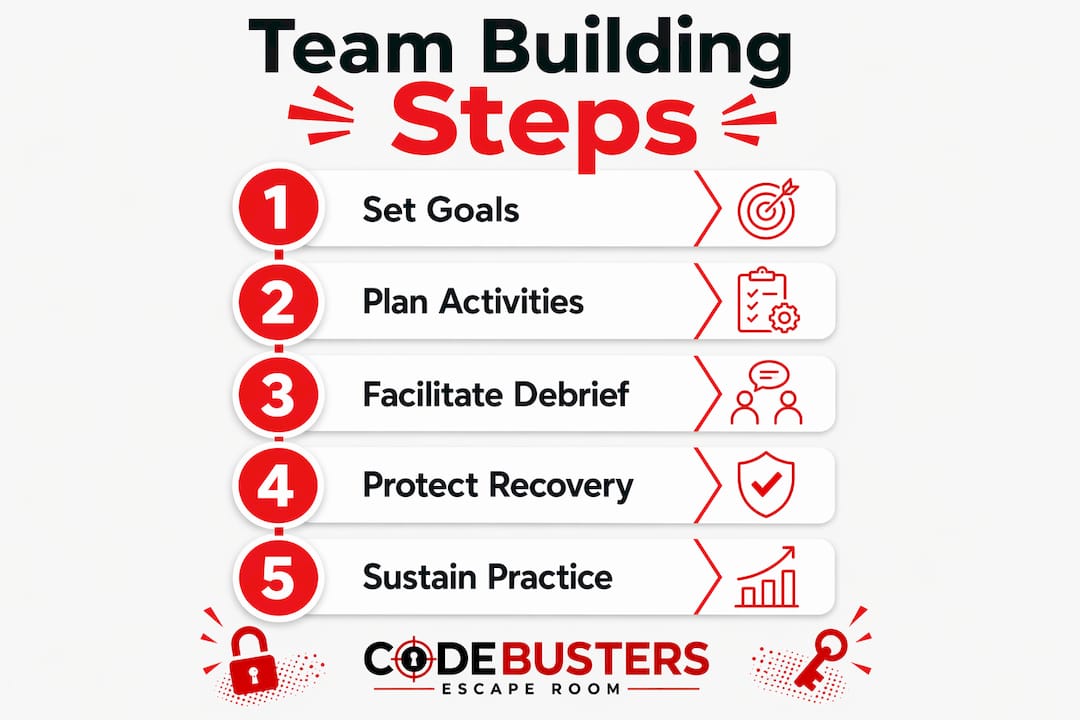
Execution separates good intentions from real outcomes. Follow this workflow to move from planning to measurable results.
-
Define your objective. Write one specific, measurable goal tied to a current team challenge. Attach a metric so you can evaluate success.
-
Select the activity. Match the activity format to the objective. Communication breakdowns call for simulation exercises. Trust deficits call for shared physical challenges. Burnout calls for recovery-focused workshops.
-
Schedule with recovery in mind. Place the event at least two days before any major deadline. Block the following day for low-demand work.
-
Communicate the plan. Share the objective, format, and expected outcomes with the team at least one week in advance. Address concerns directly.
-
Facilitate with structure. During the activity, assign a facilitator whose only job is to observe team dynamics and note specific behaviors for the debrief.
-
Run a structured debrief. Effective simulations include debriefs that link the exercise to real operational challenges. Ask three questions: What happened? Why did it happen? What will we do differently at work?
-
Measure and follow up. Revisit your objective metric two to four weeks after the event. Track whether the targeted behavior actually changed.
The most common pitfalls are predictable. Vague objectives lead to activities that feel irrelevant. Skipping recovery time turns a growth experience into another stressor. Lack of leadership follow-through sends the message that the event was theater, not real development.
The comparison below shows how structured execution differs from the typical approach:
| Element | Typical approach | Structured approach |
|---|---|---|
| Objective | “Improve team morale” | “Reduce incident response time by 30%” |
| Activity selection | Chosen by availability | Chosen to match the specific gap |
| Debrief | Optional or skipped | Mandatory, structured, 30–45 minutes |
| Recovery time | Not scheduled | 24–48 hours of low-demand work blocked |
| Follow-up | None | Metric reviewed at 2 and 4 weeks post-event |
What ongoing practices sustain team building benefits long term?
A single event does not build a resilient team. Recurring practices do. The goal is to embed stress exposure and recovery into the team’s regular rhythm so that resilience becomes a habit, not a one-time achievement.
Practices that sustain high-stress team bonding ideas over time include:
- Daily 10–15 minute huddles. Small-scale daily habits like short morning check-ins build long-term resilience and keep psychological safety active between major events.
- Weekly 20-minute retrospectives. These create a regular space to name friction, celebrate wins, and adjust communication norms before problems compound.
- Quarterly light touchpoints. A 90-minute workshop or problem-solving session every quarter keeps team cohesion skills sharp without the overhead of a full retreat.
- Annual intensive programs. One full-day or multi-day retreat per year allows deeper work on trust, communication, and shared identity. Effective team retreats for stress management combine high-intensity challenge with protected recovery time built into the schedule.
- Leadership behavior modeling. Leadership follow-through after sessions matters more than the activity itself. When managers visibly apply lessons from team events, the team takes the development seriously.
The cadence matters as much as the content. Teams that practice stress tolerance regularly perform better under pressure than teams that attend one annual retreat and return to unchanged habits.
Key Takeaways
Effective team building for high-stress teams requires specific objectives, controlled stress exposure, protected recovery time, and consistent leadership follow-through to produce lasting performance gains.
| Point | Details |
|---|---|
| Set specific objectives | Vague goals like “boost morale” fail; tie each objective to a measurable work outcome. |
| Use controlled stress exposure | Simulations, escape rooms, and adventure challenges build resilience better than low-stakes activities. |
| Protect recovery time | Block 24–48 hours of routine work after any high-intensity session to prevent burnout. |
| Debrief every activity | A structured debrief linking the exercise to real work patterns is where learning actually transfers. |
| Sustain with recurring practices | Daily huddles, weekly retrospectives, and quarterly touchpoints build resilience as a habit, not an event. |
What I’ve learned from watching teams get this wrong
Most managers treat team building as a reward, not a training tool. That framing is the root cause of most failures I’ve seen. When the event is positioned as a treat, no one expects it to change anything. And it doesn’t.
The teams that get the most out of high-stress team bonding ideas are the ones whose leaders stay involved after the event ends. The activity is the spark. Leadership behavior is the fuel. Without follow-through, the spark dies in 72 hours.
The other mistake I see constantly is skipping the debrief because the team is tired or the schedule is tight. That debrief is the entire point. The experience without the debrief is just an outing. The debrief is where the team names what they actually did, why it worked or didn’t, and what they will carry back to work.
Immersive experiences like the themed rooms at Codebusters Escape Room work precisely because they create genuine pressure in a consequence-free environment. The team has to communicate, delegate, and adapt in real time. That is the same skill set they need during a product launch crisis or an incident response. The transfer is direct, not metaphorical.
View team building as a continuous capability-building practice. One great event is a start. A year of intentional, recurring development is a culture shift.
— CodeBusters
How Codebusters Escape Room supports high-stress team development
Corporate teams in Colorado Springs use Codebusters Escape Room to put their communication and problem-solving skills under real pressure in a controlled setting. The themed rooms, including “Flight of Deception” and “Stranger 80’s,” place groups inside timed, high-stakes scenarios that require clear roles, fast decisions, and genuine collaboration to solve.
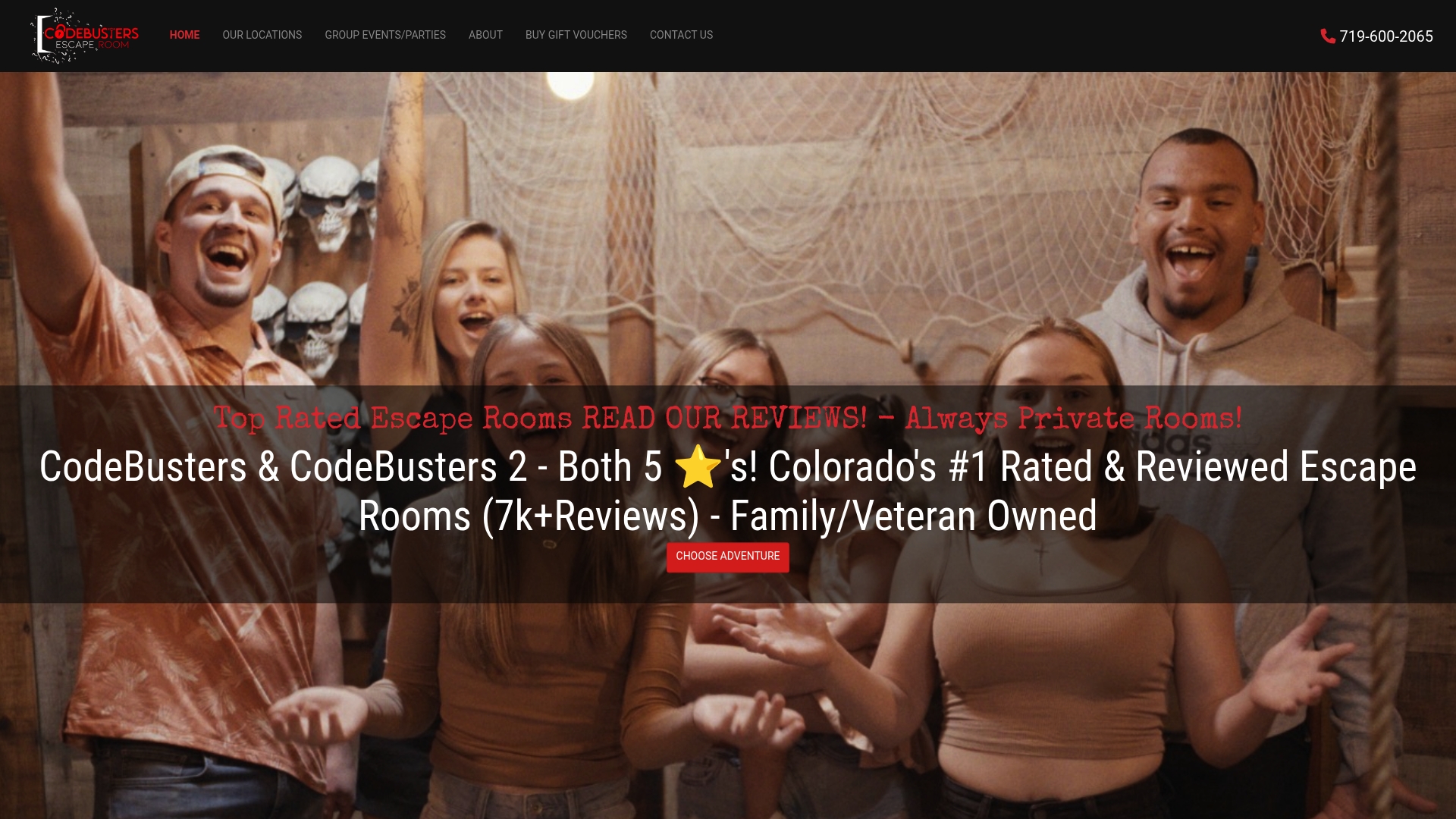
Codebusters Escape Room offers private room bookings designed specifically for corporate team events, with group sizes and difficulty levels matched to your team’s needs. Every session can include a structured debrief that connects the in-room experience to your specific workplace challenges. If you are building a team that needs to perform under pressure, this is a direct way to practice that skill. Book your corporate session at codebustersescaperoom.com and bring a real challenge to your next team development day.
FAQ
What makes team building different for high-stress teams?
High-stress teams need activities that simulate real work pressure, not low-stakes icebreakers. The goal is controlled stress exposure paired with structured recovery and debrief time.
How long should a team building session last for a busy team?
Stress-management workshops for high-stress teams run effectively in 20–40 minutes. Immersive activities like escape rooms typically run 60–90 minutes and include a debrief.
How do I measure whether team building actually worked?
Set a specific metric before the event, such as conflict resolution time or communication error rate, then measure it two to four weeks after the activity to track real change.
Why do most team building efforts fail to produce lasting results?
Leadership behavior after the session determines whether gains stick. Without visible follow-through from managers, teams revert to old patterns within days.
How often should high-stress teams do team building activities?
Daily huddles and weekly retrospectives sustain resilience between events. Quarterly workshops and one annual intensive program provide the deeper development that single events cannot deliver alone.