Teamwork Skills Checklist for Managers: 2026 Guide

A teamwork skills checklist is a structured list of collaboration competencies that managers use to evaluate, score, and improve how their teams work together. Unlike generic performance reviews, this tool targets the specific behaviors that drive group effectiveness: communication, trust, role clarity, and shared accountability. Teams that lack a formal evaluation method often misdiagnose performance problems, treating symptoms like missed deadlines or low morale without addressing the underlying skill gaps. The checklist format gives you a repeatable, objective framework to spot those gaps early and build a targeted teamwork development plan before small issues become costly ones.
1. What belongs on a teamwork skills checklist
Every effective team collaboration checklist covers seven core competency areas. These are not soft suggestions. They are the behaviors that separate high-performing teams from groups of individuals who happen to share a calendar.
- Clear communication and active listening. Team members state ideas directly, ask clarifying questions, and confirm understanding before acting. Poor listening is the most common root cause of rework and missed handoffs.
- Psychological safety. Psychological safety is not about being nice. It means team members can challenge ideas, take risks, and admit mistakes without fear of ridicule or blame. Leadership controls this factor more than any other.
- Role clarity and dependability. Every person knows what they own, what others own, and where the boundaries are. Dependability means following through without being reminded.
- Constructive feedback and conflict resolution. Teams in structured conflict resolution workshops report less interpersonal tension and more innovation than teams that avoid disagreement. Conflict handled well is a productivity asset.
- Collaboration and flexibility. Members share information across functions, adapt when priorities shift, and support colleagues outside their defined role when the work demands it.
- Shared goal tracking. Organizations using centralized boards for goal tracking see higher alignment across team members. Every person should be able to state how their daily work connects to the team’s primary objective.
- Growth mindset and continuous learning. High-performing teams treat failures as learning opportunities rather than blame triggers. This mindset accelerates both individual career growth and team output.
Pro Tip: Add a rating scale of 1–4 to each checklist item. A binary yes/no misses the nuance between “occasionally demonstrates” and “consistently models for others.”
2. How to assess teamwork skills using the checklist
Assessment works best in three layers: self-evaluation, peer review, and manager observation. Running all three simultaneously reveals where perception gaps exist and which gaps are most damaging to team performance.
Start with self-assessment. Ask each team member to rate themselves on every checklist item before you share any manager scores. This step surfaces blind spots and sets the tone for an honest conversation rather than a top-down judgment. 30-day progression models that begin with self-assessment show measurable improvement in teamwork skill acquisition compared to programs that skip this step.

Next, run peer evaluations using the same checklist. Keep responses anonymous to protect candor. Aggregate the scores and look for items where self-ratings are consistently higher than peer ratings. That gap is your highest-priority coaching target.
Then conduct what practitioners call an alignment audit. Ask team members to independently write down the team’s top three goals and their own primary responsibilities. Alignment audits consistently reveal significant perception gaps that prevent team synchronization. When two people describe the same role differently, no checklist score will fix the problem until the definition is clarified.
| Assessment method | Best for | Frequency |
|---|---|---|
| Self-evaluation | Surfacing blind spots | Quarterly |
| Peer review | Identifying collaboration gaps | Twice per year |
| Manager observation | Validating skill consistency | Ongoing |
| Alignment audit | Uncovering role and goal confusion | After major changes |
Pro Tip: Tailor your scoring expectations to experience level. Teamwork mastery spans five levels from Novice (0–1 years) to Team Catalyst (5–8 years). A Novice who scores a 2 on conflict resolution is on track. A Collaborative Leader at the same score needs a development conversation.
3. Common challenges in teamwork and how the checklist helps
Most teamwork problems share a common origin: managers assume their teams have skills that were never formally developed or assessed. The checklist makes those assumptions visible.
- Unclear roles create duplicated effort and dropped tasks. When two people think they own the same deliverable, one of them usually steps back. When neither thinks they own it, the work disappears. Role clarity items on the checklist force this conversation before a deadline reveals the gap.
- Assumed transparency blocks real contribution. True transparency means sharing the rationale behind decisions, not just the decisions themselves. Teams that only receive information without context cannot contribute meaningfully to problem-solving.
- Psychological safety misconceptions undermine innovation. Many managers believe their teams feel safe because no one complains. Silence is not safety. A checklist item that specifically asks whether team members feel comfortable challenging a manager’s idea will surface the real answer.
- Superficial team-building replaces structural collaboration. A quarterly offsite does not build teamwork. Dedicated collaboration time built into the weekly schedule, such as cross-functional Q&A sessions or structured brainstorming blocks, produces lasting behavior change.
- Unresolved conflict calcifies into disengagement. Teams that avoid conflict do not avoid tension. They store it. The checklist gives managers a neutral, documented basis for opening conflict resolution conversations before resentment becomes a retention problem.
“Teamwork is a malleable skill that requires structural support, not vague exhortations to communicate better.” — Business.com
4. Customizing your teamwork competency checklist for different team contexts
A single checklist template does not fit every team. A five-person startup squad and a 40-person enterprise department face different collaboration challenges and need different evaluation criteria.
For early-stage or small teams, weight communication and role clarity items most heavily. These teams often operate without formal processes, so the checklist itself introduces structure. Focus on whether members proactively share blockers and whether decision-making authority is understood by everyone.
For remote and hybrid teams, add checklist items specific to asynchronous communication: Does this person document decisions clearly? Do they respond within agreed windows? Do they flag when they are blocked rather than going silent? Remote teams lose hours to ambiguity that in-person teams resolve in a hallway conversation.
For mature or cross-functional teams, shift weight toward growth mindset, conflict resolution, and goal alignment. These teams have the basics covered. The gap is usually at the intersection of departments, where accountability gets blurry and collaboration breaks down.
| Team context | Highest-priority checklist areas | Lowest-priority areas |
|---|---|---|
| Small or early-stage | Role clarity, communication | Cross-functional collaboration |
| Remote or hybrid | Async communication, dependability | In-person conflict resolution |
| Mature cross-functional | Goal alignment, conflict resolution | Basic communication norms |
| High-growth or scaling | Flexibility, shared goal tracking | Individual skill depth |
Technology supports customization too. Centralized project boards let managers attach checklist items directly to team workflows, making skill assessment part of the work rather than a separate administrative task. When team members see their collaboration behaviors tracked alongside deliverables, the checklist stops feeling like an HR exercise and starts feeling like a performance tool.
For teams that want to see these skills tested in real time, escape rooms build stronger teams by putting collaboration competencies under pressure in a structured, low-stakes environment. The behaviors that surface in a timed puzzle scenario mirror the behaviors that show up in high-stakes work situations.
Key Takeaways
A teamwork skills checklist works only when it combines self-assessment, peer review, and manager observation into a single repeatable system tied to specific, measurable behaviors.
| Point | Details |
|---|---|
| Use a layered assessment approach | Combine self, peer, and manager evaluations to surface the most accurate skill picture. |
| Tailor the checklist to team context | Remote, hybrid, and mature teams need different weighted criteria to reflect their real challenges. |
| Psychological safety is a leadership variable | Leaders control whether teams feel safe enough to challenge ideas and admit mistakes. |
| Alignment audits reveal hidden gaps | Ask team members to independently state goals and roles to find where understanding diverges. |
| Embed collaboration structurally | Scheduled brainstorming and cross-functional sessions outperform generic calls to communicate better. |
What running these checklists actually taught me
Most managers I talk to treat the teamwork checklist as a once-a-year HR formality. That is the wrong frame entirely. The checklist is a diagnostic tool, and diagnostics only work when you run them regularly and act on what they show.
The insight that changed how I think about team assessment came from alignment audits. I started asking team members to write down the team’s top goals independently, without comparing notes first. The divergence was always surprising. People who sat in the same weekly meeting for months had fundamentally different ideas about what the team was trying to accomplish. No amount of communication training fixes that. Only a structured audit and a direct conversation do.
Psychological safety is the other area where I see managers consistently get it wrong. They equate a friendly team culture with a safe one. The real test is whether someone on your team has challenged your decision in the last 30 days. If the answer is no, the culture is polite, not safe. Polite teams do not innovate.
The role of communication in escape rooms offers a useful parallel here. In a timed puzzle environment, communication failures become visible within minutes. In a workplace, the same failures take months to surface as missed deadlines or team friction. The checklist compresses that feedback loop.
My honest advice: run the checklist quarterly, weight the alignment audit heavily, and treat any item where self-scores consistently exceed peer scores as your first coaching priority. The gap between how people see themselves and how their teammates experience them is where the real development work lives.
— CodeBusters
Team building at Codebustersescaperoom in Colorado Springs
Managers who want to see their teamwork checklist items come to life in a real environment have a direct option in Colorado Springs.
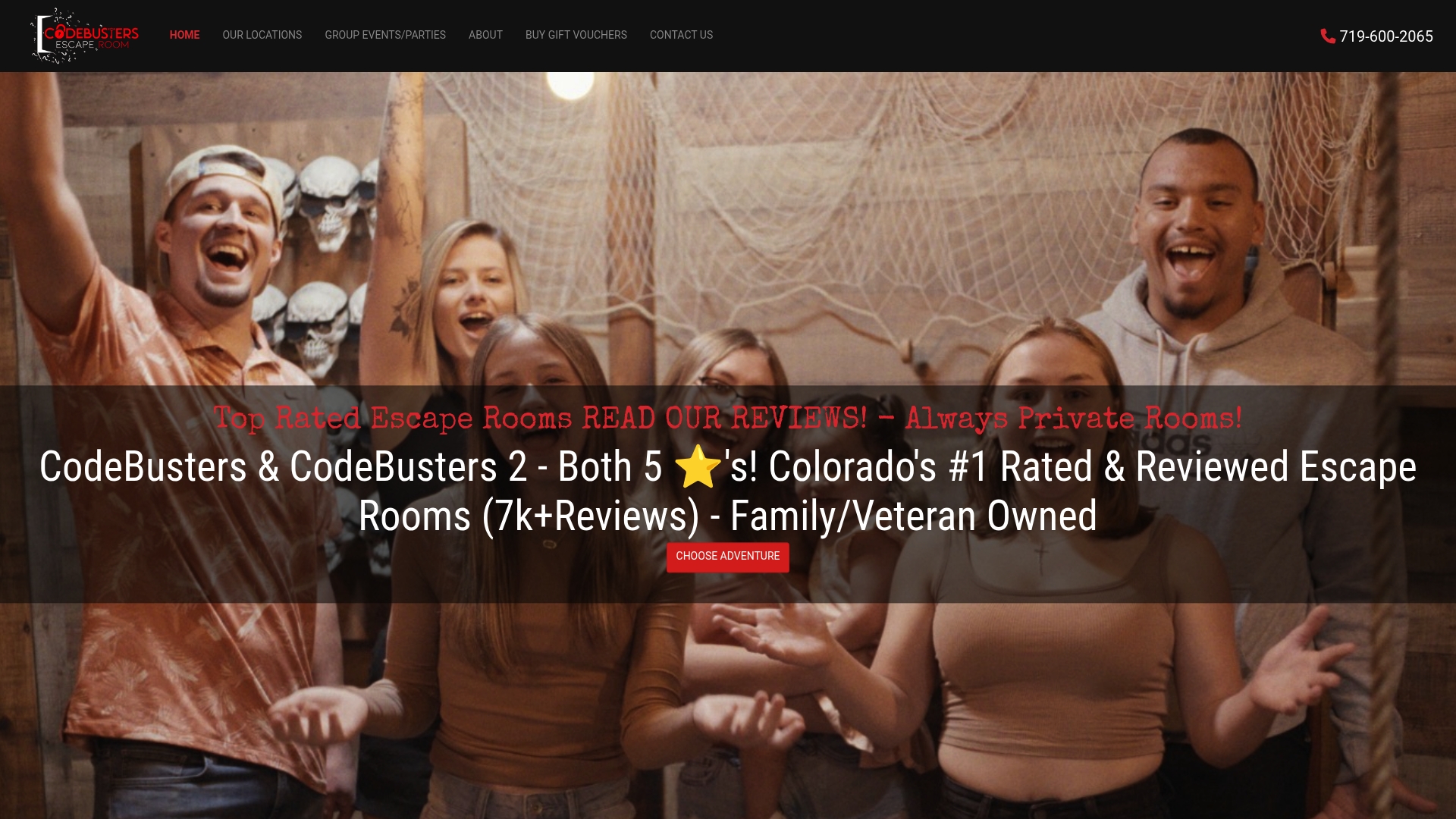
Codebustersescaperoom puts corporate teams inside themed rooms like “Flight of Deception” and “Past to the Future,” where communication, role clarity, and psychological safety get tested under a ticking clock. The behaviors your checklist measures in a spreadsheet show up immediately in a live puzzle scenario. Codebustersescaperoom is veteran and family owned, books private rooms for corporate groups, and has built a strong reputation for structured team-building experiences that connect directly to the collaboration skills managers are trying to develop. If your team needs a concrete, memorable way to practice what the checklist measures, this is a direct path to that outcome.
FAQ
What is a teamwork skills checklist?
A teamwork skills checklist is a structured evaluation tool that managers use to assess specific collaboration behaviors, such as communication, role clarity, and conflict resolution, across their team. It replaces subjective impressions with scored, repeatable criteria.
How often should managers run a team collaboration checklist?
Quarterly assessments work best for most teams. Running the checklist more frequently than that creates fatigue, while annual reviews miss the window to correct skill gaps before they affect performance.
What is the most important skill to assess on a teamwork checklist?
Psychological safety is the most critical factor in effective teams. Without it, communication, feedback, and conflict resolution skills cannot function at their full potential, regardless of individual ability.
How do alignment audits improve teamwork assessment?
Alignment audits ask team members to independently state team goals and their own responsibilities. The gaps between answers reveal where role confusion or goal misalignment is silently blocking team performance.
Can a teamwork development plan be built from checklist results?
Yes. 30-day progression models that start with self-assessment and move through peer feedback cycles show measurable skill improvement. The checklist provides the baseline data that makes a development plan specific rather than generic.