What Is a Themed Adventure Room? Your Full Guide
What is a themed adventure room, exactly?
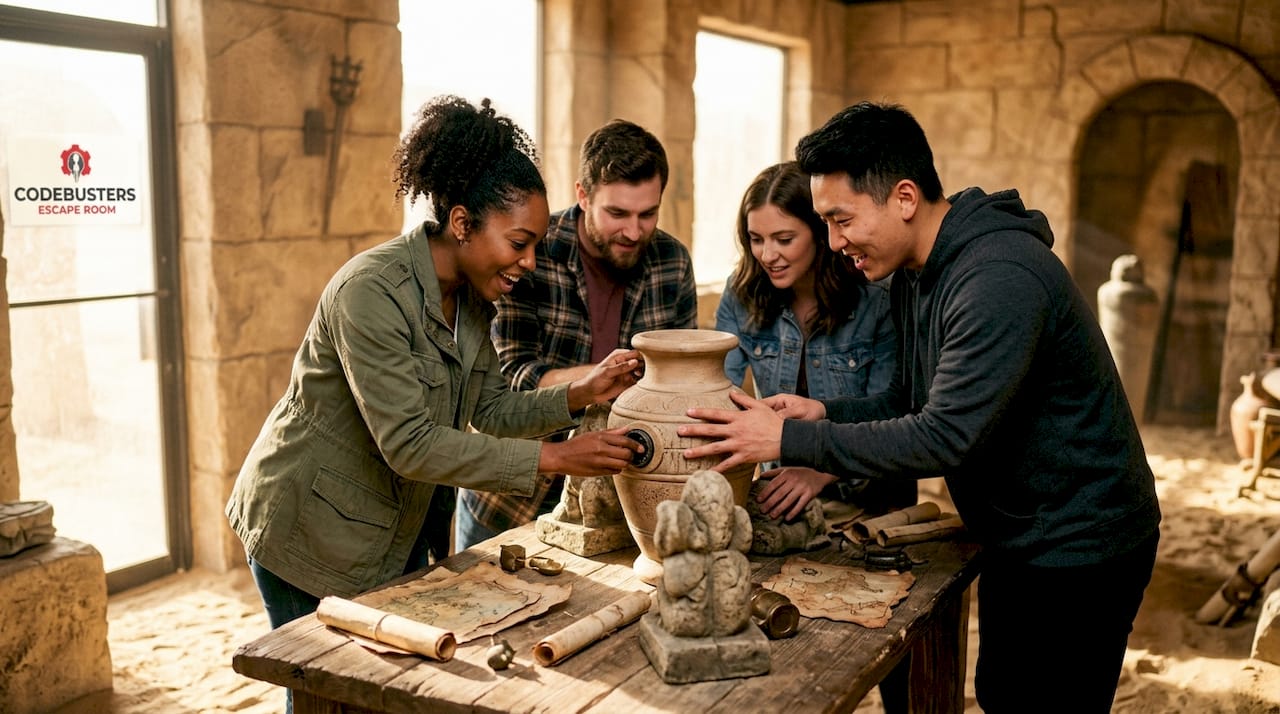
A themed adventure room is an immersive, narrative-driven environment where participants step into a story and interact with it physically and mentally. Unlike a standard puzzle room, the environment itself tells the story through lighting, sound, props, and set design. You are not just solving puzzles. You are living through a plot.
Sessions typically run 45–120 minutes, with standard rooms on the shorter end and premium, story-heavy experiences stretching toward two hours. The core experience blends:
- A narrative premise that frames every challenge
- Physical environments designed to feel like real locations
- Soundscapes, lighting shifts, and interactive props that react to player actions
- Mental and physical challenges woven into the story’s progression
- A sense of agency, where your choices shape how the story unfolds
The phrase “adventure room” signals something beyond a locked-door puzzle. Participants navigate spaces, interact with characters or automated systems, and often face multiple possible outcomes depending on their decisions.
What design elements make these rooms genuinely immersive?
The gap between a forgettable themed room and one that sticks with you for years comes down to design discipline. Professional-grade adventure rooms use lighting, soundscapes, and period-accurate decor to build specific settings, whether a 1980s government lab, a pirate galleon, or a deep-space station.
Key design elements include:
- Layered lighting: Ambient, task, and accent lighting work together to set mood and guide attention without breaking immersion
- Soundscapes: Looping audio tracks, triggered sound effects, and voice cues make the environment feel alive
- Period-accurate props: Furniture, signage, and objects match the story’s era and world, not just its color palette
- Interactive mechanics: Locks, levers, hidden panels, and automated triggers give players tactile feedback
- Multi-space layouts: Moving between rooms or areas creates a sense of physical progression through the story
A common mistake in themed room design is favoring aesthetics over functionality, producing spaces that look impressive in photos but feel cluttered and disorienting to navigate. The best rooms balance visual richness with clear sightlines and logical flow.
Color cohesion matters more than most people expect. The 60-30-10 color rule, where 60% of the space uses a primary color, 30% a secondary, and 10% an accent, keeps themed rooms visually coherent and approachable for guests of all ages.
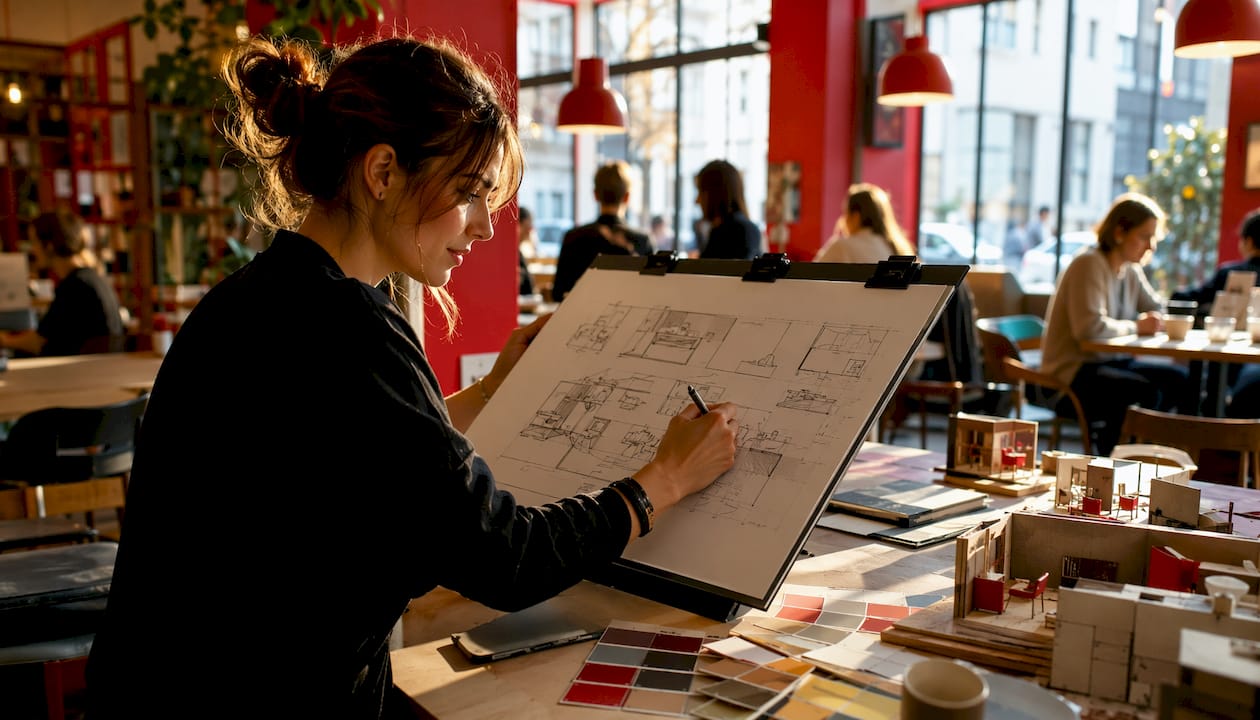
Pro Tip: When designing for families, prioritize navigable pathways and avoid sensory overload. A room that overwhelms young players with too many competing visual elements loses them before the story even starts.
How do adventure rooms differ from standard escape rooms?
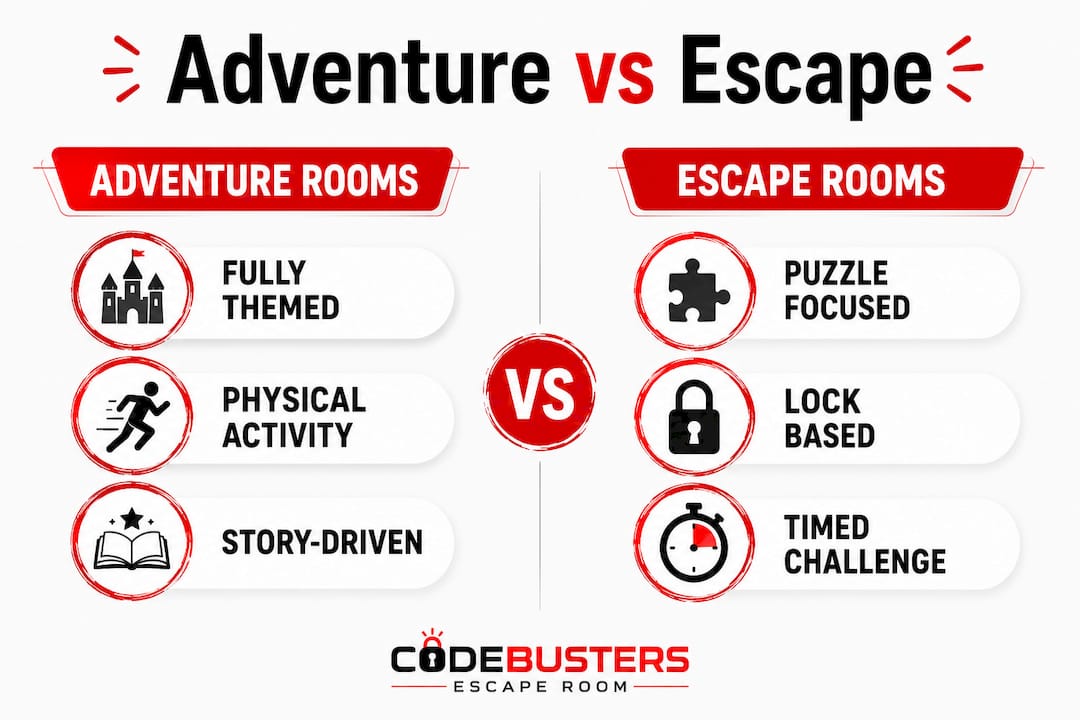
The distinction matters if you are choosing an experience for a group. Standard escape rooms center on puzzle-solving within a single space, usually with a 60-minute clock and a clear win/lose outcome. Adventure rooms expand that format significantly.
- Story depth: Adventure rooms weave clues into a plot. You are uncovering a mystery or surviving an event, not just unlocking boxes.
- Physical involvement: Crawling through passages, lifting props, or navigating dark corridors adds a layer that purely mental puzzle rooms skip.
- Multiple endings: Depending on your decisions, your group may reach different outcomes, which adds replay value.
- Live actors: Some adventure rooms include performers who interact with players, guide the narrative, or introduce surprises mid-game.
- Multi-space progression: Rather than one room with a locked door, adventure rooms often feel like walking through a movie set across several connected areas.
- Time flexibility: Certain formats drop the strict countdown in favor of exploration-based pacing.
The difference between a partially themed room and a fully themed adventure room is also worth noting. A hotel room decorated with a Legoland motif or a generic “spy” aesthetic is themed in the decorative sense. A fully realized adventure room treats every surface, sound, and prop as part of an active narrative system. The storytelling role of the environment is what separates decoration from immersion.
Family-friendly versions of adventure rooms often share the same physical sets as adult versions but adjust puzzle difficulty, lighting intensity, and remove mature content to suit younger players without gutting the experience.
What do participants actually get out of these experiences?
The benefits go well beyond a fun hour. Escape-style experiences test teamwork, lateral thinking, problem-solving, and subject knowledge, making them genuinely useful for group bonding and cognitive engagement, not just entertainment.
For families specifically, adventure rooms offer something rare: a shared challenge where adults and kids contribute equally. A child who spots a visual clue the adults missed becomes the hero of that moment. That kind of collaborative win builds real connection.
Other consistent benefits include:
- Active participation: Players move, touch, and interact rather than watch, which sustains engagement across the full session
- Cognitive variety: Challenges shift between logic, observation, memory, and creativity, so different people shine at different points
- Replay value: Multiple endings and non-linear progression mean a second visit can feel like a different experience entirely
- Accessibility: Well-designed rooms accommodate a range of physical abilities, and operators typically offer family-adjusted versions for younger groups
- Memorable outcomes: The combination of story, surprise, and shared effort creates the kind of memory that sticks, unlike a movie or a dinner out
The social and bonding value of these experiences is particularly strong for groups that do not spend much time problem-solving together, whether that is a family reunion, a corporate team, or a group of friends looking for something beyond a restaurant.
How Codebusters Escape Room brings these concepts to life
Codebusters Escape Room is a veteran and family owned business in Colorado Springs, and its rooms are a strong example of what the adventure room concept looks like when executed well. The company has earned award-winning recognition for its immersive design and its ability to serve diverse groups, from families with young children to corporate teams.
Their room lineup demonstrates the range of themes and narrative approaches the format supports:
- “Past to the Future”: A time-travel premise that integrates era-specific decor and puzzles tied directly to the story’s logic
- “Stranger 80’s”: A supernatural narrative drawing on 1980s aesthetics, with set design and audio that commit fully to the era
- “Flight of Deception”: A high-stakes scenario with layered clues and a narrative that rewards attentive players
Each room at Codebusters Escape Room is booked privately, meaning your group gets the full space without strangers joining mid-session. Difficulty adapts to the group’s composition, and safety considerations are built into the physical design rather than bolted on as afterthoughts. Gift vouchers and flexible booking options make these rooms accessible for spontaneous visits and planned events alike.
How are themed adventure rooms actually built?
The design and development process for a high-quality adventure room is closer to film production than interior decorating. It starts with a story concept, not a floor plan.
Designers work backward from the narrative: what does the player need to feel at each stage of the experience? That emotional arc drives decisions about lighting, sound, prop placement, and puzzle sequencing. A room set in a crumbling Victorian manor needs different textures, color temperatures, and audio cues than a futuristic space station, and every detail has to serve the story’s internal logic.
The physical build involves:
- Set construction: Walls, floors, and ceilings are often custom-built or heavily modified to match the theme
- Prop sourcing and fabrication: Period-accurate or custom-made objects that players can interact with without breaking
- Technology integration: Automated locks, sensor-triggered audio, and lighting systems that respond to player actions
- Puzzle design: Challenges are tested for solvability, pacing, and thematic coherence before a room opens
- Safety review: Emergency exits, clear sightlines for game masters, and accessible pathways are non-negotiable requirements
Operators commonly offer both family-friendly and standard versions of the same room, adjusting content and difficulty without rebuilding the entire set. The role themed rooms play in guest experience design has pushed the industry toward increasingly sophisticated production values, with the best rooms now rivaling theme park attractions in their attention to detail.
Interactive adventure room design has also expanded to include physical activity elements, from climbing and crawling to navigating obstacle-style layouts, which broadens the appeal for groups who want more than a seated puzzle session.
Key Takeaways
Themed adventure rooms deliver immersive, story-driven experiences that combine narrative, physical design, and collaborative challenges in ways standard escape rooms simply do not match.
| Point | Details |
|---|---|
| Duration and format | Sessions run 45–60 minutes for standard rooms and 80–120 minutes for premium, story-heavy experiences, blending mental and physical challenges within a narrative framework. |
| Design discipline | Layered lighting, soundscapes, and the 60-30-10 color rule keep rooms immersive without becoming overwhelming. |
| Adventure vs. escape rooms | Adventure rooms add story depth, physical elements, live actors, and multiple endings beyond standard puzzle formats. |
| Family accessibility | Operators adjust difficulty, lighting, and content for younger groups while keeping the same physical sets. |
| Real-world example | Codebusters Escape Room in Colorado Springs offers privately booked, award-winning rooms like “Stranger 80’s” and “Past to the Future.” |